Ok let’s start this one with a quick movie as to why all the discussion on hookless has come up of recent. During the UAE Tour Thomas De Gendt took a hard hit for seemingly no reason initially. Literally there he was riding down a straight road in there peloton and then the next thing he hit the deck. Luckily he was able to get up and finish the stage. This could have been much worse. See for yourself below.
The Professional Cyclists Association has stated now that they are unhappy with hookless tires and calling for them to be banned. CPA President Adam Hansen stated
“When you look at the images of Thomas De Gendt’s bike, his tyre came off, the safety foam inside got caught in the fork, and that locks up the front wheel,” Hansen said.
“Some teams are racing with hookless rims. This crash is why the CPA are 100 per cent against hookless rims.
“Tyres should not come off a rim. The maximum psi these hookless tyres can have put in them is 73, and if you hit something for sure it goes above the maximum 73psi rating on impact. That is why tyres are coming off.”
So what is a hookless rim and why perhaps are hooked rims required. These great pics are taken from Flo cyclings blog and show exactly the difference.
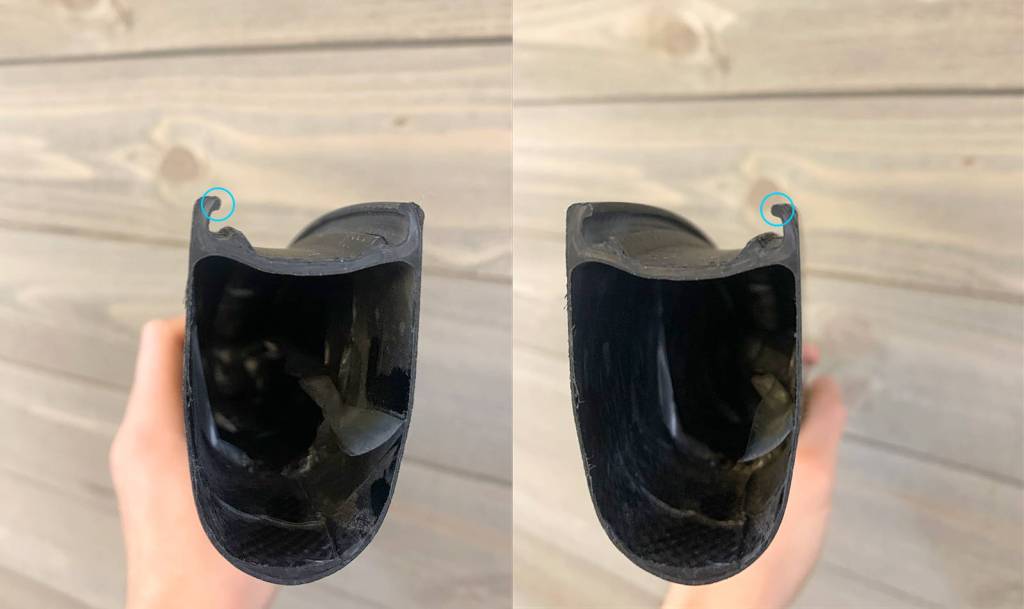
Above you can see hooked rims. The bead of the tire locks under the hook on the rim, circled in blue. Those that have ever set up tubeless will know the importance of getting the bead to set which basically is having a quick enough shock of air to squeeze the bead into the hook, seal and then for pressure to build. It might also help explain why some tubeless tires are so hard to unseat when they have been practically glued in place by sealant. Interestingly on motorbike and car rims there is no hook. But the tires going on them are very different , with stiff side walls that mean a tire can support itself standing up, unlike your standard folding bike tire.
A hookless rim looks like the below:
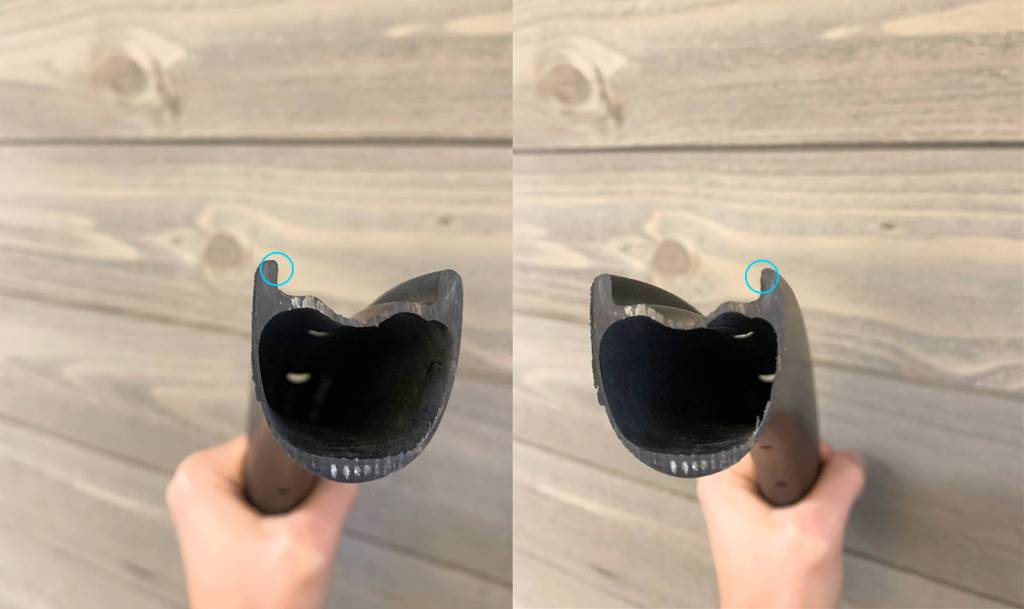
No surprise that in the little blue circle again there is no hook. So why would wheel manufacturers remove the hook?
Well there is no inaccuracy in saying a hookless wheel is going to be lighter and all the weight weenies love that! And let’s face it, its weight on the outer most part of the rotating wheel which is the last place you want weight for a quick spin up and good acceleration. For a pro this might be super important, in a world of marginal gains. For the weekend warrior (even the most dedicated one) it’s about as useful as the Absolute Black Oversize pulley wheels with ceramic bearings.
Why else then push it? Well it’s cheaper to manufacture for sure. So while promoting performance you can look after the bottom line too as a manufacturer.
The issue is that the set up between tire and rim becomes super important and you cannot exceed 73 psi in tire pressure. Hit a stone and bang, the tire may come off. Also how do you know you have 73 psi? Most pump gauges are not that accurate or precise. And then what is the pressure when you get on the bike, or when the temperature changes.
It seems hookless is great for low pressure applications, mountain biking being one. But are we ready for it on road bikes? Perhaps not…. What do you think?
 Sur Le Rivet