One barrier to people advancing in their cycling skills is the fear of having to use clip in pedals, in fact it might even stop some from wanting to start. The thought of actually locking your feet to the bike is frickin’ scary. I know that once you are used to it, likely you would not ever consider riding “sans clips”. I am sure all of us at some stage, when learning to ride with clips, once messed up when stopping and failed to clip out. The absolute panic, when you realize you are falling over and there is nothing you can do. Even the very best last-minute twist might free a foot but once passed 30 degrees it is all over… you are landing on your side and NO MATTER HOW HARD YOU TRY – this can NEVER look cool… The shame… you look so amateur! So what’s the deal with pedals? Why are the called clipless and yet there is all this talk of clipping in and out. I’ll try and run through the reasons, the types of pedals, why I made an uncool decision in what I use, and the risks of too much freedom to adjust pedal setup… My son just asked a very pertinent question.. Why with so few readers of this site do I bother? Because I enjoy this stuff and if only one person finds something new in it all, then it’s worth it. Sort of…. And I also got asked the other day by an experienced rider for some thoughts on pedals/cleats.. so here goes.
I will not start at the very beginning of pedals which were basically metal rods! I guess when it started getting more pro there was a desire to get more leverage via the pedal as this is where after all the power is being put down by the aspiring ride and this is when the toe clip arrived.
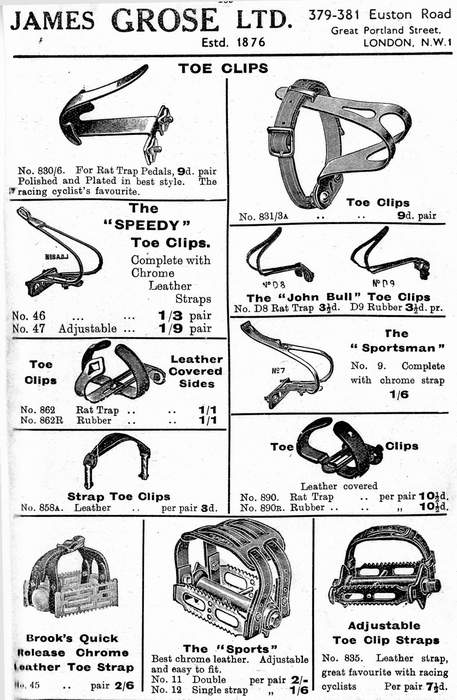
I can remember using toe clips back in the 1970’s and I have them on a couple of retrobikes, both super shiny and with lovely brown leather straps and the truth is a hate them. Hate is a very strong word but they are so uncomfortable and a pain to get into. They drag along the floor getting scratched which ruins the aesthetic of the bikes and frankly they are more grief than help. Of recent I noted a bit of a flat pedal vs. clipless pedal debate coming up with the argument that perhaps flats are all that is necessary… I am not sure but let me say for a long ride a choice between toeclip and flat is an easy one. The clips cut off all circulation, they can actually hurt. I am sure there is someone who will be more than keen to tell me I am doing it all wrong but there are some ancient cycling arts I am not going to waste too much time on. So here it is - the original clip system. And things had to change so they did.
The purist will say the Cinelli M71 back in 1970 was the first clipless pedal. The toeclip was replaced with a sole mounted cleat that locked to the pedal with the rider having to use a lever to clip out. I think we can honestly say the real change came with the LOOK #PP65 in 1984 where the French company used their ski tech knowledge to develop a system by which the rider twisted their foot so as to release from the pedal. It was the first commercially successful pedal likely due to Greg Lemond using them (as well as him making us all aware of aero style shades and time trial bars, LEGEND! The story of his adoption of the time trial bars is awesome, again another ski based innovation).
So more accurately where had entered the time of the cleated pedal as opposed to clipless but one feels the marketing folks had it right… “we have a great, new product, and we could call it the cleated pedal, but then will the adoption rate be slow as it might be associated still with clipped pedals…. what if we called it a clipless pedal to make it 100% clear its not the same old ****”… I wonder.
So very crudely we have two basic systems to cleated pedal. The road version and the offroad… or basically Shimano, LOOK, SRAM road systems vs the SPD (which stands for Shimano Pedaling Dynamics). Below you can see the basic differences. This image is from https://handsonbike.blogspot.com/2012/03/clipless-pedals-on-dahon-boardwalk.html and is assume. I hope you don’t mind me using it…
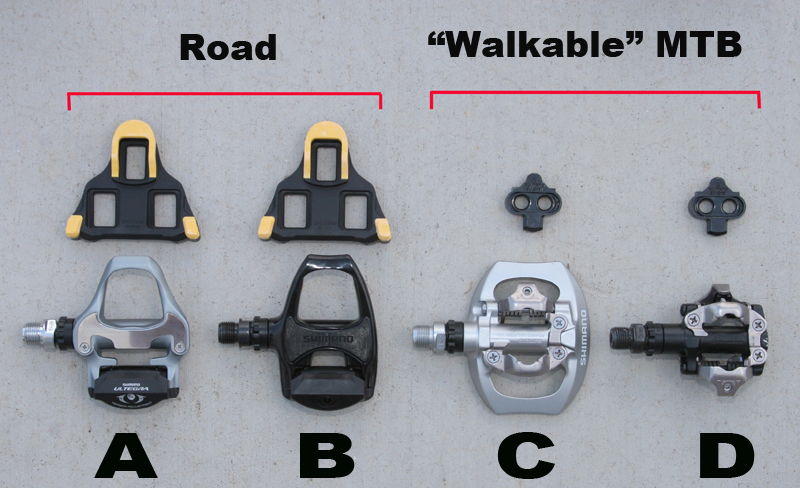
So on the left you have the conventional road cleat and on the right you have the SPD version. The walkable distinction is a good one. You can walk in the “road” version but to be honest you are not going to be dancing up stairs in rush. The road cleats are broad and long which in theory means better power transmission but also because they are big they cannot be packaged on the shoe easily and hence protrude and become a challenging thing to walk on. You mince basically and definately don try walking on cobbles or down stairs. Openly you could climb the Eiffel Tower in SPD shoes but no way in the road cleat. The walkable SPDs are also more debris tolerant and hence better when doing mountain biking or gravel . Also road shoes tend to have stiffer shoes, again to aid power transmission. This can get super expensive when high end super duper carbon soles, that could be used as crow bars, come into the mix. But with the new debate on flat pedal vs cleat does it really matter. For the average weekend warrior and mid level rider perhaps not so much physically but psychologically perhap so..
The road cleat can come with some degrees of float, from 0 degrees to 15. This means you can twist the shoe and cleat slightly as you peddle. There is some thought that 0 degrees is better for power transmission, but I don’t really buy it. I think unless you are getting a good fit then being locked in 100% could turn to injury.. You are going through the same kinetics 100s of 1000s of times and being slightly off can lead to painful knees etc. Cleat fit is super important and often overlooked. The more kms you do the more important this is. As they trend for wider tires has grown there has also been an unrelated trend for cleats to move back on the shoe. The old rule of thumb about the ball of the foot for cleat positioning is gone and being behind the cleat is gaining traction. I certainly can attest to preferring it.. Getting a bike fit saw nothing happen to the bike BUT the fitter rolled his eyes at my cleats… Apparently for my feet I need them well back from the ball and indeed he stated certain shoes shouldn’t even be used as the cleat position needed would not be possible. I appreciate it’s more than the ball of the foot and relates to the correct metatarsals(!) etc. but that for another time.
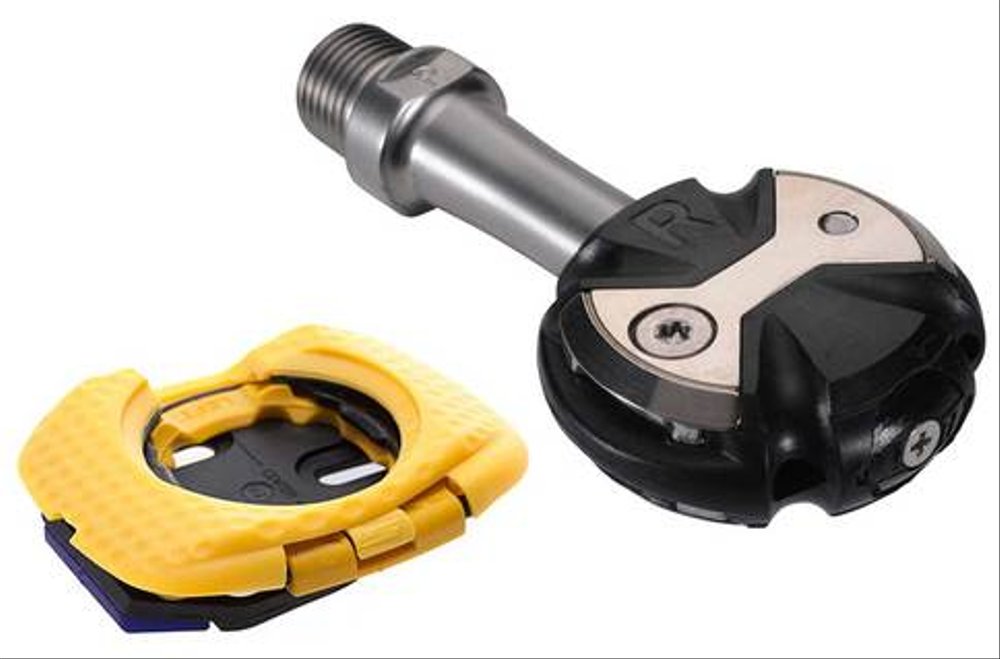
It’s for this reason I am now going to buck what was my favorite systems for years. I loved the SpeedPlay pedal system which basically look like little lollypops on your cranks. To me they were the UBER cool in world of pretty ugly pedals and back then I was doing triathlons and the thought of being able to clip in on either side was great (til I decided to leave shoes on the pedals for transitions – not that it made ANY difference to my times). The also had the “walkable” system which was super good compared to regaulr road cleats. The pedal allows for lots of position adjustment, and I think that’s its downfall for the average rider. The system is just to flexible, especially and you can sort of adjust the Q factor as well as float. I messed up one and ended up with a sore knee for a month before I figured it out. Yes, you can say it was all my own fault but it wouldn’t have happened with more standard systems. I do like how Wahoo have industrialised the system with better materials but one does hear moans about the cost.
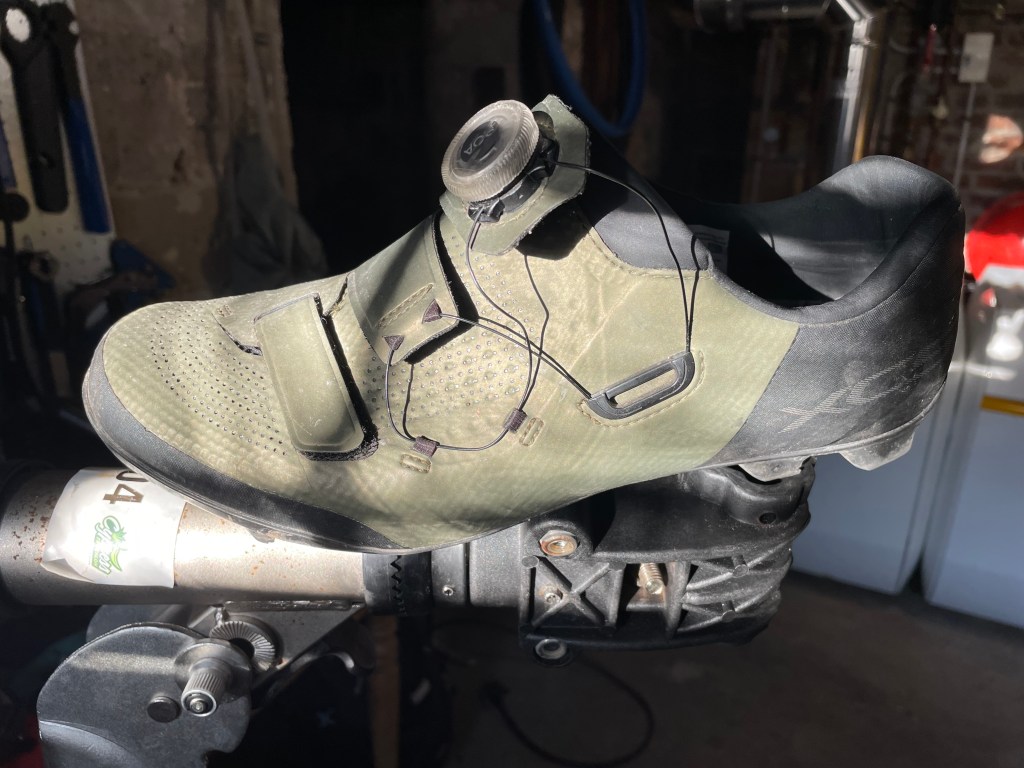
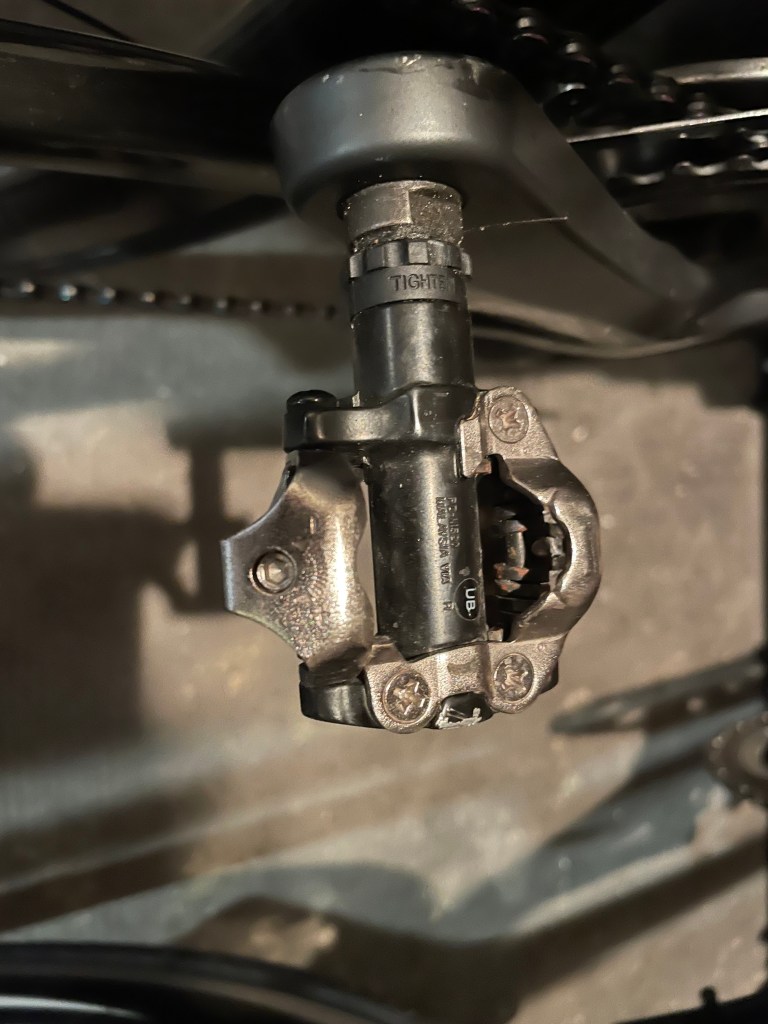
Getting arthritis was the game changer for me. I was on Speedplays and it was just getting too painful. Perhaps it was the shoes and their fit but despite having just bought new shoes when I had my first flare, I knew I had to change. Comfort became my number one priority and I reality I don’t think power transfer make as huge difference for a cyclist of my ability. I am not a pro needing super stiff, super locked in marginal gains. I want something comfortable that I can also walk in without looking like Bambi on the frozen lake. So my Endurace CFR-SL Di2 (yes, building it here but this isn’t a slow bike) has….shock horror… SPD pedals…. Oh, the sin! Oh, the uber uncoolness. How do I turn up for a club ride????? Know what? I frickin’ love them… I can walk at the coffee shop, they are stiff enough, are not heavy AND I can clip in either side without a look. SPD based shoes also tend to be more comfortable overall and with thicker uppers (great in winter). The gravel trend has helped massively because many SPD based shoes now don’t look like MTB monsters. They look fast which is more than can be said for me. I think the trend to this style of pedal will grow on road bikes. Another benefit is that the cleats are robust.. no need to replace, because after walking to the coffee shop from the bike more than twice has worn them down. Setting up SPDs is easy, as in hard to mess up and get injured. So there you go… you don’t have to follow the “rules” 100% (is there a a rule for this???). Go with what works for you… Don’t sweat the marginal gains. Go enjoy clipping into your clipless pedals, and try not to forget to clip out infront of everyone.
 Sur Le Rivet